

If your NSW property was built before 1990, you should assume asbestos-containing materials are present.
This article details how to identify asbestos NSW. Find out what to look for, and how a professional conducts asbestos inspection Newcastle NSW, to protect your health and keep you on the right side of NSW law.
Why Is Asbestos Still a Major Issue in NSW?
Australia was a big user of asbestos products during the 20th century. Asbestos was cheap, durable and widely available, which made it a popular choice for construction from the 1940s through to the late 1980s. A full national ban did not come into effect until 31 December 2003.
In NSW, a significant number of homes across the state still contain asbestos products, many of which have never been disturbed or identified.
The material itself is not always an immediate danger. Asbestos that is intact and undisturbed poses a relatively low risk. The problem arises when materials are cut, drilled, sanded, broken or deteriorate over time. Asbestos fibres can become airborne and easily be inhaled, causing serious and potentially fatal diseases, including mesothelioma, asbestosis and lung cancer.
What Does Asbestos Look Like?
Asbestos cannot be identified by sight alone. This is one of the most important things to understand. Asbestos fibres are microscopic, and the materials that contain them often look identical to standard building products.
That said, knowing what asbestos-containing materials commonly look like gives you a useful starting point for deciding whether a professional inspection is warranted.
Common Forms of Asbestos-Containing Materials
- Flat or corrugated fibro-cement sheeting is used on internal and external walls, ceilings, and fences. It closely resembles standard cement sheet products.
- Corrugated asbestos roofing, which can look very similar to corrugated iron or steel roofing from a distance.
- Vinyl floor tiles, often with a speckled or geometric pattern, are common in kitchens, hallways and laundries in pre-1990 homes.
- Pipe lagging and thermal insulation around hot-water systems, boilers, and heating pipes. This is often a whitish or grey fibrous material wrapped around pipework.
- Textured ceiling coatings, sometimes called “popcorn” ceilings, were applied in homes built or renovated before 1990.
- Eave linings, soffit boards and gutter boards on older homes.
NOTE: The colour, condition and age of a material cannot confirm whether asbestos is present. Only an accredited laboratory analysis of a collected sample can do that.
Where Is Asbestos Commonly Found in NSW Homes?
Asbestos was used in so many building products that it can turn up in almost any part of an older home. The locations below are the most common places it is found during professional inspections.
Bathrooms and Laundries
- Wall sheeting behind tiles and around wet areas
- Flooring underlay beneath vinyl tiles
- Pipe insulation around hot and cold water lines
Roofing and Eaves
- Corrugated roofing sheets on older homes and outbuildings
- Eave linings and soffit boards
- Ridge capping along the roofline
Fencing and External Walls
- Fibro cement fencing panels on properties built before 1990
- External wall cladding on fibro homes
- Garden sheds and outbuildings attached to or near the main dwelling
Garages and Sheds
Many freestanding garages and sheds in older suburbs were built entirely of asbestos-cement sheeting. Key areas to note include:
- Internal wall linings and ceiling panels
- Workbench tops and fixed shelving in older structures
Other Locations Worth Checking
- Backing material behind ceramic wall tiles
- Electrical meter boards and switchboard backing panels
- Insulation around wood-fired heaters and slow combustion stoves
- Textured paint or spray-applied finishes on ceilings
IMPORTANT: If your home was built before 1990 and has not been fully renovated, treat any sheeting, insulation, flooring or ceiling material as potentially containing asbestos until proven otherwise.
What Are the Signs Your Property May Contain Asbestos?
Use this checklist as a quick self-assessment. If one or more of these points apply to your property, a professional asbestos inspection is the recommended next step.
- The building was built or renovated before 1990
- Fibro or cement sheeting is visible on internal or external walls
- The home has original corrugated roofing or eave linings that have never been replaced
- There is evidence of past DIY renovations, particularly in bathrooms, kitchens or laundries
- Sheeting, insulation or ceiling materials appear to be deteriorating, cracked or crumbling
- The property has an older freestanding garage, shed or outbuilding
- Original vinyl floor tiles are present and have never been lifted
These signs do not confirm the presence of asbestos, but they indicate a meaningful risk that warrants investigation.
Can You Identify Asbestos Yourself?
No. Visual identification cannot confirm whether a material contains asbestos.
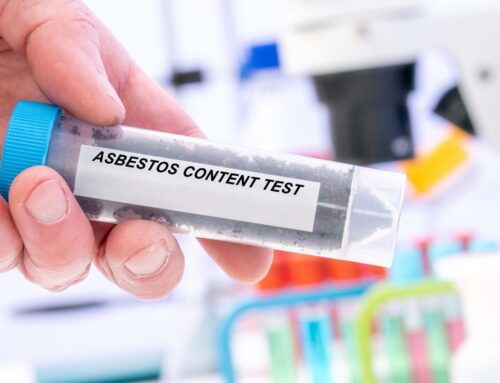
The only way to be certain of the presence of asbestos is via the laboratory analysis of a sample. Until that analysis is complete, any suspect material in a pre-1990 property should be treated as if it contains asbestos.
What Is the Difference Between Bonded and Friable Asbestos?
Understanding this distinction matters because the two types carry different levels of risk and are subject to different legal requirements in NSW.
Bonded asbestos (non-friable): The asbestos fibres are locked into a solid matrix, such as cement sheeting or vinyl tiles. This type poses a lower immediate risk when the material is in good condition and undisturbed. It becomes hazardous when cut, broken, sanded or drilled.
Friable asbestos: The material is loose, crumbly or powdery and can release fibres into the air with very little disturbance. This is the higher-risk classification. Examples include pipe lagging, spray-applied insulation and loose-fill roof insulation.
Newcastle friable asbestos removal must, by law, be carried out by a licensed Class A asbestos removalist. This applies regardless of the quantity involved.
Why Is DIY Sampling Not Recommended?
- Collecting a sample without proper equipment can release asbestos fibres into the air
- Cross-contamination of the sample can produce an invalid result
- Disturbing the material even slightly can create a greater hazard than leaving it in place
- NSW regulations require that asbestos work be carried out by trained and licensed professionals
What Should You Do if You Suspect Asbestos?
If you think a material in your property may contain asbestos, follow these steps in order.
- Do not cut, drill, sand, scrape or pressure-clean the material
- Keep children, pets and other occupants away from the area
- Do not vacuum any dust or debris from the area, as standard vacuums spread fibres rather than contain them
- Mark or rope off the area if it is accessible to others
- Do not attempt to collect a sample yourself
- Contact a licensed asbestos contractor to carry out a professional inspection
- They will collect samples and take them for testing at an accredited laboratory
To protect your health and the health of anyone who lives in or uses the building, please avoid disturbing the material until a qualified person has assessed it.
What Are the Laws Around NSW Asbestos Identification and Removal?
NSW has clear legal requirements for how asbestos must be managed, removed and disposed of. These apply to residential, commercial and industrial properties.
Key NSW Asbestos Regulations
- SafeWork NSW is the relevant regulatory authority for asbestos removal and management compliance
- Any removal of friable asbestos, regardless of the quantity, must be carried out by a licensed Class A asbestos removalist
- Bonded asbestos removal exceeding 10 square metres must be carried out by a licensed Class B removalist or higher
- Asbestos waste may only ever be disposed of at an accredited facility. Illegal dumping carries significant financial penalties.
When Is a Licensed Removalist Required?
A licensed asbestos removalist is legally required in the following situations:
- Any volume of friable asbestos removal
- Bonded asbestos removal exceeding 10 square metres
- Asbestos removal as part of a renovation, demolition or site clearance project
- Properties being prepared for sale or lease that have known asbestos present may also require an asbestos register or management plan, depending on the property type and intended use
If you are planning any renovation or demolition work on a pre-1990 property in Newcastle, checking for asbestos before work begins is a legal requirement.
Think Your Newcastle Property May Contain Asbestos?
If you own, manage, or plan to renovate a pre-1990 property in Newcastle or the surrounding suburbs, a professional inspection is the right first step before any renovation work can begin.
At Safe Asbestos Removal Newcastle, we provide professional asbestos inspections, accredited testing and licensed removal services across Newcastle and the Hunter Region. Our team is fully licensed for both bonded and friable asbestos removal in Newcastle, covering residential, commercial and industrial properties of all sizes.
Whether you need an asbestos inspection, full friable asbestos removal Newcastle, or a compliance report for an upcoming renovation or sale, the team is ready to help.
Contact Safe Asbestos Removal Newcastle today to book an inspection or arrange asbestos testing for your property.



Leave A Comment