

For property owners across NSW, understanding asbestos testing, its types, and the associated risks is important. Australia banned asbestos in 2003, but properties built before that date may still contain it. NSW has one of the highest concentrations of asbestos-containing materials in Australia, and the health risks are real and severe.
Homeowners and property managers need to learn about NSW asbestos testing. Read on to find out about the different types of asbestos, the potential health risks for you and your family, and how asbestos testing is managed.
What Is Asbestos?
Asbestos is naturally occurring and was hugely popular in construction in Australia until we banned the use, import, and manufacture of all asbestos products in 2003.
Where Was Asbestos Used in NSW Properties?
Asbestos may be found in a typical pre-2003 NSW home or commercial property. Common uses were as follows:
- Roof sheeting, cement cladding and gutters
- Floor tiles
- Pipe lagging and insulation
- Textured ceiling coatings, eaves, soffits, and fences
Types of Asbestos Found in NSW Properties
There are three main types of asbestos used commercially.
- Chrysotile or white asbestos is the most commonly used type in Australia
- It can be found in roofing, walls, ceilings, and floor products
- The fibres are considered less hazardous than other types, but still dangerous and require professional testing and removal
- Amosite (Brown Asbestos) is typically found in cement sheets, pipe insulation, and ceiling tiles
- The straight, brittle fibres become airborne more easily when disturbed
- Crocidolite, or Blue Asbestos, is the most hazardous form of asbestos
- Widely used in spray-on coatings, pipe insulation, and some cement products
- It has very thin fibres that can penetrate deep into the lung tissue
- Anthophyllite, tremolite, and actinolite are less common types
- They weren’t used commercially, but may appear as contaminants in other building materials
Friable vs Non-Friable Asbestos
This is a critical distinction for NSW homeowners seeking to understand risk levels.
What Is Friable Asbestos?
- An asbestos-containing material (ACM) that can be reduced to powder by hand pressure or easily crumbled
- Fibres are released into the air and may be inhaled
- Considered the highest risk and is subject to strict regulations in NSW
- Can only be handled by a licensed Class A asbestos removalist
What Is Non-Friable Asbestos?
- Also called “bonded asbestos”. The fibres are bound within a solid matrix (such as cement)
- Less likely to release fibres unless cut, drilled, sanded, or damaged, so it offers a lower immediate risk, but can become friable with airborne fibres if deteriorated or mishandled
- Removal may only be carried out by a licensed removalist
Why Does the Distinction Matter?
- The type of asbestos determines the licence class required for removal in NSW under SafeWork NSW regulations
- Affects the level of risk management required during work
The Health Risks of Asbestos Exposure
Asbestos fibres, when airborne, are invisible and odourless. When inhaled, fibres become lodged in the lining of the lungs and chest cavity. They can cause severe health issues, which may not become apparent for decades after exposure.
- Diseases linked to Asbestos Exposure include
- Lung cancer and mesothelioma cause extreme problems with breathing
- Asbestosis causes the scarring of lung tissue, resulting in breathing difficulties and reduced lung function
The Asbestos Testing Process in NSW
In this section, we share what actually happens during professional asbestos testing so you understand the process.
Step One – Asbestos Assessment and Site Inspection
- A qualified asbestos expert conducts a visual inspection of the property
- Suspicious materials are identified based on age, location, condition, and type
- The assessor produces an initial report and recommends sampling locations
Step Two – Sample Collection
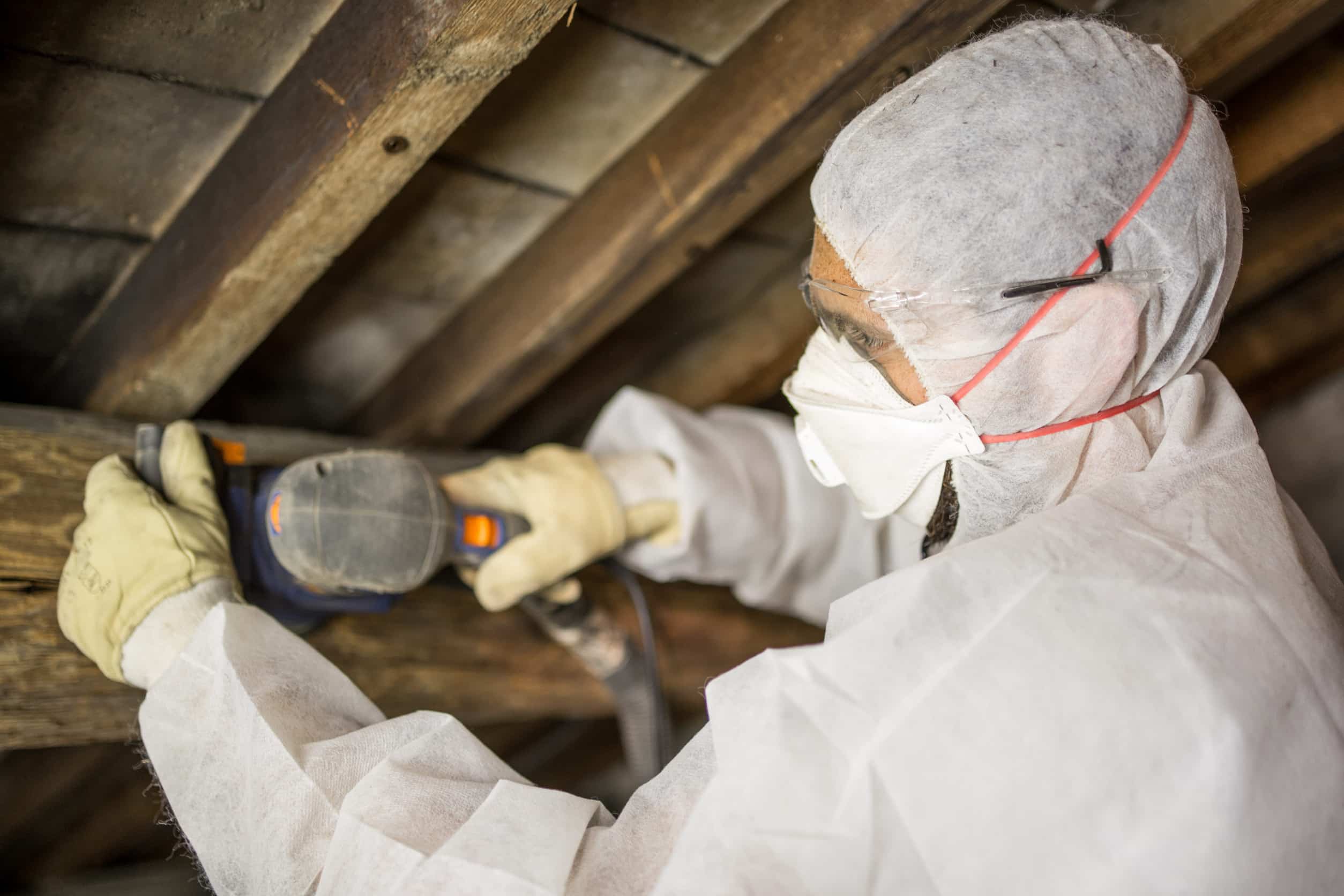
- Samples are taken by a trained professional using personal protective equipment (PPE)
- Samples are sealed, labelled, and sent to a NATA-accredited laboratory for analysis
- This is not a task suitable for untrained individuals. Disturbing materials without protection can create a risk to health
Step Three – Laboratory Analysis
- Samples are taken to accredited laboratories for analysis to identify asbestos fibres
- The results will confirm the presence of asbestos and identify the type as friable or non-friable
- Turnaround times vary, but results are typically available within a few business days
Step Four – Asbestos Report and Recommendations
- The assessor provides a written report detailing findings, material locations, condition, and recommended actions
- Materials are classified by risk level, and the report will recommend monitoring, encapsulation, or removal
- This document forms the basis of any asbestos management plan
What Happens If Asbestos Is Found?
- Not all asbestos requires immediate removal
- Bonded asbestos in good condition may be left in place and monitored or encapsulated
- Friable asbestos or damaged bonded asbestos requires prompt removal by a SafeWork NSW licensed contractor
Get Professional Asbestos Testing in NSW
At Safe Asbestos Removalists, we are proud of our reputation as a trusted provider of NSW asbestos testing services.
Our experienced local team have relevant qualifications under SafeWork NSW requirements, and we perform both testing and removal.
Professional asbestos testing is the first step toward a safe, compliant property. Contact the team today to request an inspection or book an assessment.



Leave A Comment